
How to Reduce Glare While Driving Safely

A low afternoon sun on Highway 290, headlights reflected on rain-slick pavement, and the bright display of the car behind you can turn a familiar drive into a visual strain. To reduce glare while driving, it helps to look beyond a darker lens or a quick windshield wipe. The right solution considers when glare happens, how your prescription performs behind the wheel, and whether your eyewear is fitted to keep your clearest vision in the right place.
Glare is more than an inconvenience. It can reduce contrast, delay how quickly your eyes recover after exposure to bright light, and make it harder to spot lane markings, pedestrians, or changes in the road surface. For Houston-area drivers, where intense sun, sudden rain, and evening traffic are part of the routine, thoughtful lens choices can make every trip more comfortable and more confident.
Why Driving Glare Feels So Demanding
Glare occurs when light scatters or reflects in a way that overwhelms the visual detail your eyes are trying to see. During the day, sunlight may bounce off windshields, chrome, pale concrete, standing water, and the hood of another vehicle. At night, headlamps, illuminated signs, and wet roads create points of bright light against a dark background.
Your eyes can adapt to changing light, but they need time. That recovery period may be barely noticeable on a clear afternoon, yet it becomes more significant at dusk or during a rainy night. Age, dry eyes, early cataract changes, and an outdated prescription can all make glare feel stronger. So can a lens that is scratched, smudged, poorly centered, or missing the coating best suited to your driving habits.
The goal is not to eliminate every bright light. That is neither realistic nor safe. The goal is to control unnecessary reflections and preserve contrast, so your eyes do less work while you remain fully aware of the road.
Start With the Road and Your Windshield
Before changing eyewear, address the surfaces between your eyes and the road. A windshield can look clean in a driveway and still carry a thin film that blooms around headlights at night. Clean both the inside and outside of the glass with products intended for automotive glass, then use a fresh microfiber cloth to avoid leaving haze behind.
Replace worn wiper blades and keep washer fluid topped off. In heavy rain, streaks and water droplets can scatter light across your field of vision. If your windshield has deep scratches, chips in your line of sight, or persistent interior haze that will not clear, professional repair or replacement may be the safer choice.
Inside the vehicle, dim dashboard lighting enough to reduce reflections in the windshield without making controls difficult to read. Avoid placing shiny objects or bright screens on the dashboard. A pair of sunglasses will work harder when the windshield is clean, but even exceptional lenses cannot fully overcome a compromised viewing surface.
The Best Lenses to Reduce Glare While Driving
The right driving lens depends on whether your primary challenge is daytime sun, nighttime reflections, changing weather, or all three. A personalized recommendation begins with your prescription, driving schedule, work demands, and preferred frame.
Polarized sunglasses for daytime reflections
Polarized sun lenses are especially helpful for reflected glare from wet roads, vehicle hoods, and other horizontal surfaces. They filter a particular direction of reflected light, which can make the road ahead look calmer and more defined on bright days. For many drivers, a polarized prescription sun pair is one of the most useful additions to their everyday eyewear.
The trade-off is that polarization can affect the appearance of some digital displays, depending on screen angle and vehicle design. Before choosing a lens, it is worth checking your car's dashboard, navigation screen, and head-up display while wearing a demonstration pair. The best option should improve outdoor comfort without making essential information harder to see.
Premium anti-reflective coating for night driving
For nighttime driving, the priority is typically a clear lens with a high-quality anti-reflective coating. This coating reduces distracting reflections from the front and back of the lens. It can lessen the ghost images and light scatter that appear around headlights, traffic signals, and streetlights.
A premium coating also makes lenses easier to keep clear when it includes durable hard-coat and easy-clean properties. This matters because fingerprints and fine scratches scatter light. ZEISS anti-reflective lens options are designed to support sharper vision and reduce reflections without adding a visible tint, making them a strong consideration for drivers who spend time on the road after dark.
Be cautious about heavily tinted or yellow lenses for night driving. While a warm tint may feel subjectively more comfortable in certain conditions, a darkened lens reduces the light reaching your eyes. Night driving already requires you to make the most of limited light. For most people, a clear, precisely prescribed lens with premium anti-reflective treatment is the more reliable approach.
Photochromic lenses for changing conditions
Photochromic lenses darken in bright conditions and return toward clear indoors. They can be an excellent all-day choice for someone moving between errands, school pickup, outdoor appointments, and office time. Their convenience is real, particularly for drivers who do not want to switch between two pairs throughout the day.
However, photochromic lenses may not darken as much behind a windshield because modern automotive glass blocks some of the ultraviolet light that activates many photochromic designs. Certain advanced photochromic options are made to respond more effectively in the car, but they still do not replace a dedicated polarized sun lens for every driver. It depends on how much of your driving happens in direct sun and whether you prefer the strongest possible glare control or the convenience of one pair.
Prescription Accuracy Is a Driving Safety Detail
A prescription that feels acceptable for reading emails may not perform as well at highway speed. Small uncorrected astigmatism, an outdated distance prescription, or an inaccurate pupillary measurement can soften contrast and increase fatigue. If road signs seem to arrive late, headlights starburst more than they once did, or you find yourself squinting at dusk, schedule a comprehensive eye examination and bring up driving specifically.
For progressive lens wearers, the fitting process matters just as much as the prescription. The distance portion of the lens must align naturally with your habitual posture behind the wheel. If a progressive is fitted too high, too low, or without careful attention to frame position, you may tilt your head or search for a clear zone while checking mirrors and instruments.
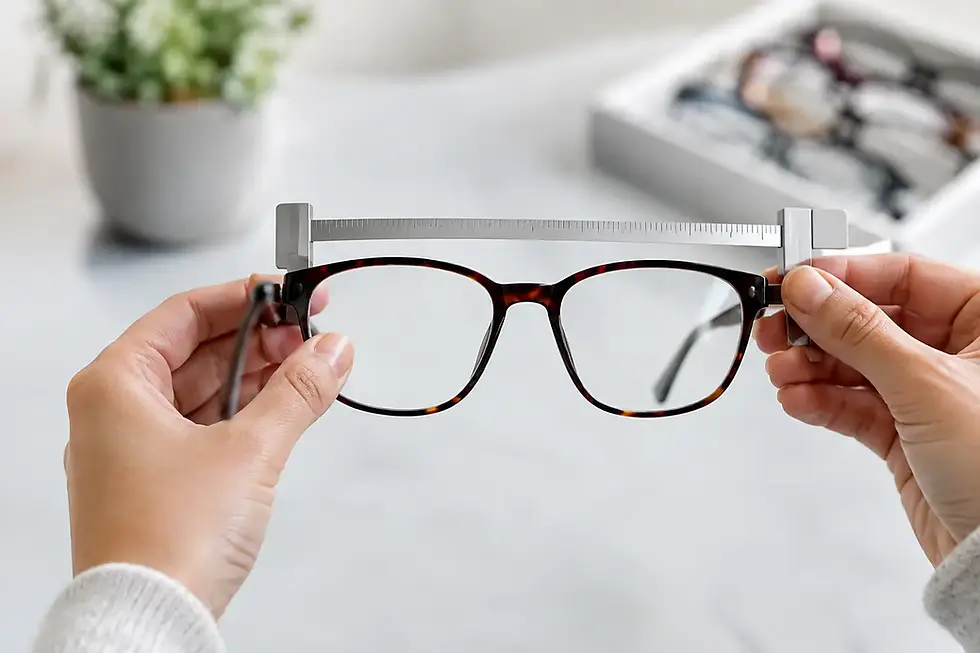
Frame choice plays a role, too. A frame that slides down the nose changes where you are looking through the lens. One that is too narrow may limit peripheral awareness, while a frame with an overly deep or wraparound shape can require more specialized lens design. A skilled optician accounts for vertex distance, pantoscopic tilt, frame curve, and how the frame sits on your face. Those details are not cosmetic finishing touches. They help your lenses deliver the visual performance they were designed to provide.
Build a Two-Pair Strategy When Driving Is a Priority
One pair rarely has to do every job perfectly. If you drive frequently in both daylight and darkness, a clear everyday pair with premium anti-reflective lenses and a separate polarized prescription sun pair is often the most effective arrangement. You gain dependable night clarity without sacrificing the comfort of strong daytime glare control.
This approach also gives you a practical backup pair in the car or at home. For clients who rely on progressive lenses, careful lens design can make both pairs feel familiar, reducing the adjustment that comes with switching eyewear. At Optica Caballero, that conversation begins with your actual routine: commute times, weekend travel, vehicle displays, outdoor activities, and how your current glasses perform when conditions are less than ideal.
Small Habits That Make a Noticeable Difference
Keep lenses clean with a lens-safe spray and clean microfiber cloth, rather than a shirt hem or paper towel that can leave scratches. Store sunglasses in a case when they are not in use, especially in a hot vehicle where loose items can damage lenses. Use your sun visor early, before the sun sits directly in your line of sight, and leave more following distance in rain or low light to give yourself more time to process changing conditions.
If headlights suddenly seem unusually harsh, halos become more pronounced, or glare is accompanied by pain, double vision, or a dramatic vision change, do not assume it is only your glasses. An eye care professional should evaluate those symptoms promptly.
The best driving eyewear should feel unremarkable once you are on the road: no squinting, no constant head movement, no pressure points, and no second-guessing whether you are seeing clearly enough. That kind of comfort comes from taking the time to get the prescription, lenses, frame fit, and your real daily habits right.


Comments