
When Should Prescriptions Change? Signs to Watch

A familiar sign usually appears first: you are holding your phone farther away, squinting through a presentation, or avoiding driving after dark because headlights seem harsher than they used to. Knowing when should prescriptions change is not always as simple as noticing that your glasses are a year old. Your eyes, daily demands, lens condition, and frame fit all play a role.
A new prescription can bring sharper, more relaxed vision, but an updated pair of glasses is not automatically the answer to every visual frustration. Sometimes a careful adjustment, a new lens design, or a better anti-reflective coating makes the meaningful difference. The right next step starts with understanding what has changed and when it began.
When Should Prescriptions Change?
For most adults, an eye exam every one to two years is a sensible baseline, even when vision seems stable. Your eye doctor determines the medical timing for your individual needs, especially if you have diabetes, glaucoma risk, a history of eye disease, or take medications that may affect vision. If your doctor recommends more frequent exams, follow that schedule.
Between visits, a prescription should be reassessed when clear vision is no longer consistent or comfortable in the situations that matter most to you. That may be computer work, reading, meetings, travel, golf, cooking, or driving home after sunset. Small changes can feel surprisingly significant when your day requires long hours of focused vision.
A prescription can also be correct on paper but no longer ideal in practice. Someone who has moved into a screen-heavy role, begun commuting farther, or started relying more heavily on close reading may need lenses tailored more precisely to those tasks. The goal is not simply to see an eye chart. It is to see comfortably and confidently throughout your actual day.
Signs your current glasses may no longer be working
Blurred or fluctuating vision is the clearest signal, particularly if it occurs at a consistent distance. Perhaps street signs take longer to sharpen, subtitles look soft from the sofa, or small print seems to fade in and out. If you find yourself repeatedly cleaning lenses that are already clean, your eyes may be working harder than they should.
Frequent headaches, eye fatigue, brow tension, or a tired feeling after reading and screen use can also point to a prescription change. These symptoms have many possible causes, including dry eye, poor lighting, stress, and an outdated lens design. They deserve attention rather than assumption.
Night driving is another common turning point. Halos, starbursts, reflections on wet roads, and excessive glare can make a familiar route feel less comfortable. A changed prescription may be part of the issue, but scratched lenses and worn anti-reflective coatings can contribute as well. Premium glare-reducing lenses can improve the experience when the prescription and fit are confirmed first.
For progressive-lens wearers, the signs can be more specific. You may be lifting your chin to find a clear zone, tilting your head to read, or feeling that your computer area is too narrow. Those habits may indicate a changing near prescription, but they can also mean your lenses sit too low, the frame has loosened, or the original progressive design no longer suits your work pattern.
A Change in Vision Is Not Always a Change in Prescription
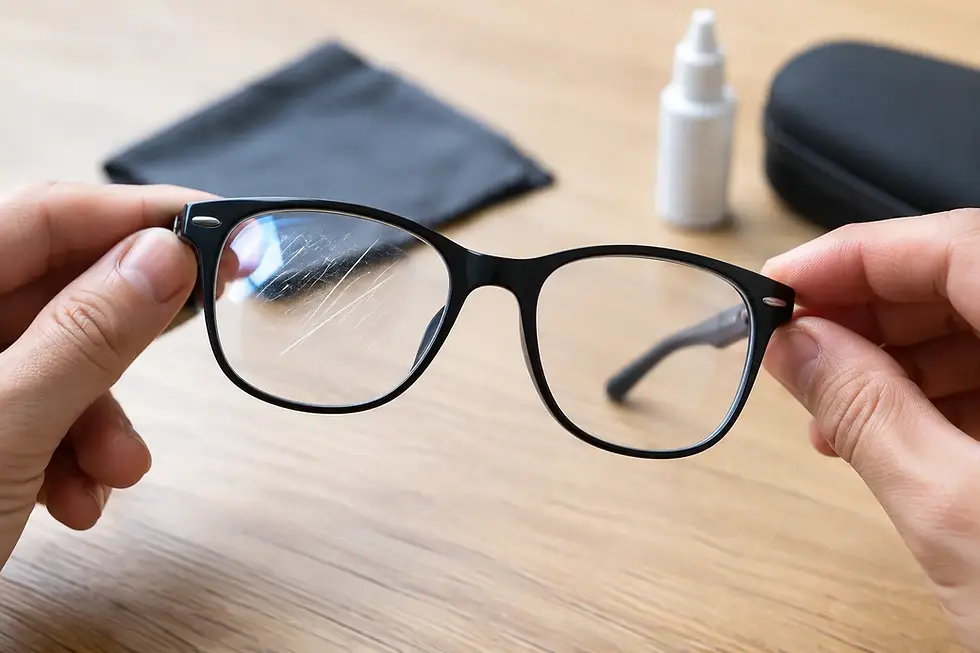
Eyewear has a working life. Lenses can accumulate fine scratches, coatings can degrade, and frames can gradually spread or sit unevenly. Even a subtle shift in how a frame rests on the nose changes the position of the optical centers in front of your eyes. That can make otherwise accurate lenses feel off.
Before assuming your prescription has changed, look at the condition and fit of your glasses. Are the nose pads worn? Are the temples loose? Do the lenses sit crookedly? Are there scratches in your direct line of sight? A professional adjustment can restore comfort quickly when fit is the problem. No rushing, no pressure - just a careful look at what is happening.
Dry eye is another frequent source of inconsistent clarity, especially in Houston-area heat, air-conditioned offices, and long stretches of digital work. Vision that clears after blinking and then blurs again may not be solved by stronger glasses. An eye doctor can help determine whether ocular dryness, allergies, or another condition needs treatment.
Why Life Changes Often Lead to Lens Changes
Prescriptions tend to evolve gradually, but visual needs can change overnight. A promotion that adds more dual-monitor work, a new hobby involving detailed handwork, or a longer commute can expose limitations that were easy to overlook before.
After about age 40, many adults begin noticing presbyopia, the normal age-related reduction in near focusing ability. Reading menus in dim restaurants becomes more difficult, phone text drifts farther away, and switching between a laptop and colleagues across the room takes more effort. Readers may help for a narrow task, while progressive lenses offer a more integrated option for people who move frequently between distances.
The best lens choice depends on how you use your eyes. A traditional progressive may be excellent for a client who moves between meetings, reading, and driving. Someone spending eight hours at a desktop may benefit from an occupational or computer-focused design that prioritizes intermediate and near distances. A driver who struggles with reflections may place greater value on a premium anti-reflective coating and lenses selected for visual comfort behind the wheel.
This is why a refraction alone should not be the entire conversation. Lens technology, measurements, frame position, and your visual habits determine how a prescription performs once it leaves the exam room.
When a Prescription Change Needs Prompt Medical Attention
Gradual changes are common. Sudden changes are different. Contact an eye doctor promptly for abrupt loss of vision, new double vision, flashes of light, a sudden increase in floaters, a curtain-like shadow, eye pain, marked redness, or a severe new headache with visual symptoms. Do not wait to see whether new glasses solve these concerns.
The same applies if one eye seems noticeably worse than the other or if straight lines suddenly look wavy. Eyewear can correct refractive errors, but it cannot treat an underlying eye-health concern. A timely medical evaluation protects more than visual comfort.
Getting Better Results From Your Next Pair
Once your eye doctor has provided an updated prescription, the dispensing process matters. A well-made pair begins with accurate measurements, including how the frame sits on your face and where you naturally look through the lenses. This is particularly important for progressive lenses, higher prescriptions, and detailed digital lens designs.
Frame selection is not separate from optical performance. A frame that slides, pinches, or sits too far from the face can compromise comfort and visual alignment. The most distinctive independent frame is still only the right choice if it supports the lens design and feels natural through a full day.
Bring your current glasses to your appointment, even if you dislike them. They offer useful clues: where you see well, where you struggle, how the frame has worn, and whether your habits have changed. Be candid about screen time, nighttime driving, reading, travel, and any adaptation challenges with prior progressives. Those details help an experienced optician recommend the appropriate ZEISS lens design, coating, and fit rather than treating every prescription as interchangeable.
At Optica Caballero, that conversation is intentionally personal. Your vision deserves more than a transaction, and the right update should feel considered from the first measurement through the final adjustment.
If your glasses are asking you to squint, tilt, postpone a drive, or take frequent breaks from close work, listen to that pattern. Schedule the eye exam, bring your eyewear in for a careful review, and give yourself the benefit of vision that feels as composed and capable as the rest of your day.


Comments