
A Multifocal Adaptation Guide for Daily Comfort

The first few days in multifocal lenses can feel unexpectedly busy. A countertop may look as though it shifts when you move your head, stairs may require more attention, and reading your phone can mean finding a new natural posture. This multifocal adaptation guide explains what is normal, what helps, and when a fitting adjustment deserves a closer look.
For many adults, multifocal lenses are the most practical way to see across a full day without changing glasses. They bring distance vision, intermediate vision, and reading vision into one lens. The goal is not simply to make every distance visible. It is to make work, driving, conversation, shopping, screens, and close detail feel comfortable in real life.
Why Multifocal Lenses Feel Different at First
Multifocal lenses, often called progressive lenses, use carefully calculated zones rather than visible lines. The upper portion supports distance vision, the center portion is designed for intermediate tasks such as a dashboard or desktop monitor, and the lower portion provides close vision for reading. Your eyes and brain learn where each zone is located and how to use it efficiently.
That learning period is why a new pair can feel different even when the prescription is correct. Peripheral areas of a progressive lens contain a degree of unwanted astigmatism, a natural trade-off that allows multiple viewing distances in one lens. Premium lens designs manage those areas more effectively, but they do not eliminate the need to turn your head toward what you want to see.
Adaptation also depends on the change from your prior eyewear. Someone moving from single-vision reading glasses may need more time than a longtime progressive wearer updating an existing prescription. A stronger prescription change, a different frame shape, dry eyes, or a new work setup can all affect the experience.
The First Week: Give Your Eyes a Fair Chance
The most useful habit is simple: wear your new multifocals consistently. Switching back and forth to an old pair can delay adaptation because your visual system never settles into the new viewing pattern. Put them on in the morning and use them throughout your normal routine, unless your optician or eye doctor has given you different instructions.
For distance viewing, look through the upper portion of the lens and turn your head toward the object. When walking, keep your chin in a natural position rather than looking through the reading area at the bottom of the lens. On stairs, escalators, curbs, and uneven ground, slow down briefly and look directly where you are stepping. This is especially helpful during the first several days.
For close work, lower your eyes first, then make a small head adjustment until the text is clear. Avoid lifting your chin high to read through the bottom of the lens. That position often signals that the frame needs adjustment, the reading area is not being reached comfortably, or the task is positioned too low.
Computer users may need the most intentional setup. Place your monitor directly in front of you, at a comfortable height and roughly an arm's length away. If you spend hours with multiple monitors, wide spreadsheets, detailed design work, or a high monitor position, standard progressives may not be the best answer by themselves. A dedicated occupational lens can provide a broader intermediate and near viewing area for work, while your everyday multifocals handle the rest of the day.
A Multifocal Adaptation Guide for Common Daily Tasks
Driving is often one of the easiest activities to adapt to because the distance zone is naturally positioned at the top of the lens. Give yourself a few daytime drives before relying on a new pair for an unfamiliar nighttime route. If glare from headlights is a concern, a premium anti-reflective treatment and lenses selected for driving can improve comfort and contrast, though no lens can remove every challenging lighting condition.
At a restaurant, use the lower reading portion for the menu, then lift your gaze to see the person across from you through the distance zone. The in-between range is useful for a table setting, a laptop, or a person seated nearby. This back-and-forth movement becomes automatic with regular wear.
For phones, bring the device to a comfortable chest-to-eye level rather than holding it low in your lap. For books and paperwork, sit upright and keep the reading material at a natural distance. Good lighting matters more than many people expect. Multifocals can correct focus, but they cannot replace adequate light for fine print, low-contrast materials, or detailed hobbies.
Fit Is Part of the Prescription
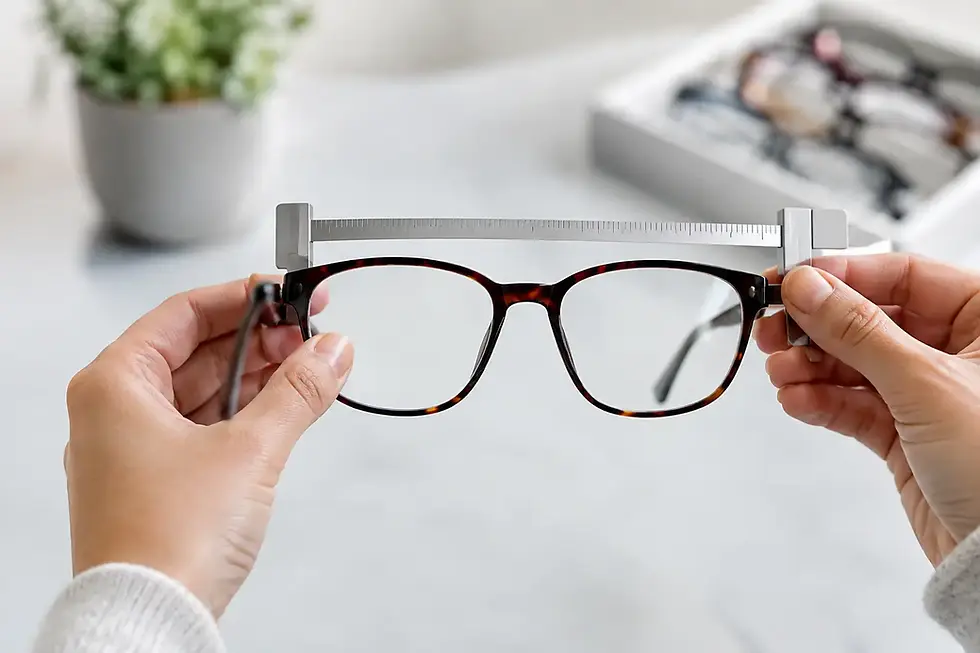
A progressive lens is only as good as its measurements and placement. The optical center, fitting height, vertex distance, pantoscopic tilt, and frame position all influence how naturally the lens performs. A frame that sits too low, slides forward on the nose, or tilts incorrectly can make a well-made lens feel unnecessarily difficult.
This is why selecting a frame for progressive lenses requires more than choosing a color or shape. A shallow fashion frame may work beautifully for some prescriptions and lens designs, but it may offer less vertical room for others. A larger frame can provide more lens depth, yet it also needs secure fit and balanced proportions. The right answer depends on your prescription, facial features, work habits, and personal style.
At Optica Caballero, we take the time to observe how a frame sits when you are relaxed, not only when you are posed in front of a mirror. Small adjustments to the nose pads, temples, and frame alignment can change how comfortably you access each viewing zone. No rushing, no pressure - precision fitting is part of the care.
How Long Does Adaptation Take?
Many people feel comfortable within a few days. Others need one to two weeks, especially if they are first-time progressive wearers or have had a meaningful prescription change. A short learning curve is common. Persistent discomfort is not something you should simply accept.
Some sensations can be normal early on: mild peripheral swim, needing to turn your head more deliberately, or momentary uncertainty on stairs. Those sensations should steadily improve. Headaches, nausea, consistently blurred vision at a key distance, or a need to hold your head in an awkward position should prompt a check-in sooner rather than later.
Do not wait weeks if the lenses never feel clear for driving, computer work, or reading. The issue may be as straightforward as a frame adjustment or a measurement review. In other cases, the prescription, lens design, or task-specific needs deserve another conversation. Good optical care is not a one-time handoff. It includes making sure the finished eyewear performs as intended.
When a Different Lens Design Makes More Sense
The best multifocal is not always the most expensive option or the same option your friend wears. Lens design should reflect where you spend your visual energy. A frequent driver may prioritize crisp distance vision and glare management. A professional who works between a laptop, desktop monitor, and clients across a desk may benefit from an enhanced intermediate corridor. Someone who reads extensively, sews, cooks, or works with fine detail may value a generous near zone.
Premium designs, including advanced ZEISS progressive options, are tailored around prescription parameters and visual behavior. That personalization can reduce unwanted peripheral effects and improve comfort, particularly for stronger prescriptions or demanding routines. Still, expectations matter. A lens optimized for broad computer viewing may not offer the same distance performance as an everyday progressive, and a compact frame can limit the available reading area. There is always a balance between lens geometry, frame choice, and daily use.
Your lifestyle may also call for more than one pair. Everyday progressives can be paired with dedicated computer glasses, prescription sunglasses, or driving-focused eyewear. That is not excess for its own sake. It is a practical approach when a single lens must otherwise compromise too many important tasks.
A Better Way to Settle Into Your New Glasses
Approach the first week with patience, but pay attention to useful details. Notice whether blur happens at one distance or throughout the day. Notice whether the frame slides, whether one eye feels less clear, and whether a particular task forces you into an unnatural posture. Those observations help an optician pinpoint the solution quickly.
Keep your lenses clean, too. Smudges and fine dust are more distracting in multifocals because you are using different zones throughout the day. Rinse particles away first, then use a clean microfiber cloth and lens-safe cleaner. Avoid paper towels, shirt hems, and household cleaners that can scratch lenses or damage premium coatings.
The right multifocal lenses should eventually fade into the background of your day. Give yourself time to learn the new visual map, and give your optician the opportunity to refine the fit. Clear, comfortable vision is built through precise measurements, thoughtful lens selection, and the care to get the final details right.


Comments