
Five Benefits of Custom Lenses for Daily Vision

A prescription can be accurate on paper and still leave something to be desired in real life. If your glasses feel tiring after a day at the computer, create distracting reflections while driving, or never quite sit right in your field of view, the lens design may be the missing piece. The five benefits of custom lenses come down to a more personal approach: lenses measured, selected, and fitted around how you see, where you look, and what you do each day.
Custom does not mean choosing the most expensive option by default. It means making thoughtful decisions about prescription design, frame shape, lens material, coatings, and the precise position of the lenses in front of your eyes. For someone who moves between meetings, screens, school pickup, and Houston traffic, those details can make a meaningful difference.
Five Benefits of Custom Lenses
1. Sharper vision where you actually use it
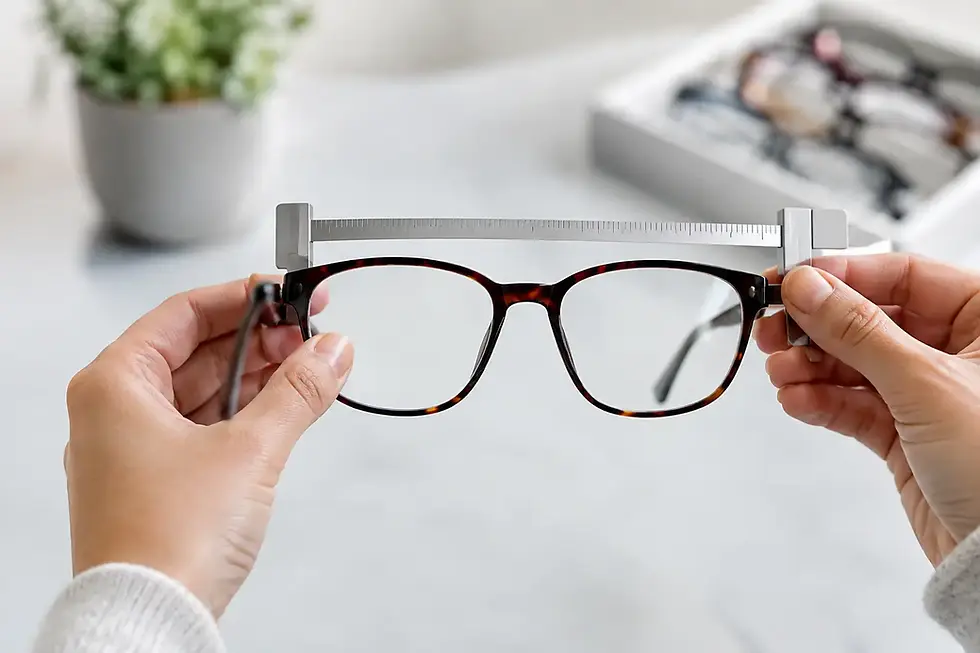
A standard lens is made to address a prescription. A custom lens is designed around the way that prescription functions within your chosen frame and daily routine. Measurements such as pupillary distance, fitting height, vertex distance, pantoscopic tilt, and frame wrap help determine how the lens should be positioned for your eyes.
That level of precision is particularly valuable with stronger prescriptions, astigmatism, or progressive lenses. A small measurement error may not seem significant, but it can affect visual clarity at the edges of the lens, the location of a reading area, or the ease of finding a comfortable viewing position.
For progressive wearers, personalization can make the difference between constantly moving your head to locate clear vision and looking more naturally through the lens. ZEISS progressive lens designs can be tailored to the frame and wearer, helping create smooth transitions among distance, intermediate, and near vision. The result is not simply sharper vision at an eye chart. It is clearer vision when checking a phone, reviewing a presentation, cooking from a recipe, or reading street signs across an intersection.
2. Better comfort from morning to evening
Eyestrain is often blamed on screen time alone. Screens can certainly contribute, but lens design, reflections, and an imprecise fit can also leave your eyes working harder than they need to. When lenses align well with your natural line of sight, your visual system does not have to compensate as much throughout the day.
Custom lenses also allow a more considered choice of material. A high-index lens may reduce thickness for a stronger prescription, while a carefully selected aspheric design can provide a flatter, more refined appearance and clearer peripheral vision. The right material depends on the prescription, frame, and wearer. A very thin lens is not automatically the best lens if it compromises the look, balance, or optical performance of a particular frame.
Premium anti-reflective coatings are another comfort consideration. ZEISS DuraVision coatings can reduce distracting surface reflections while improving scratch resistance and making lenses easier to keep clean. When overhead lights, computer screens, or a bright window are reflecting back at you, less glare can make a long day feel noticeably easier on the eyes.
3. More confidence behind the wheel
Night driving asks a great deal of your vision. Headlights, wet pavement, illuminated signs, and dashboard displays compete for attention, especially after a full day of work. If glare makes driving feel more stressful than it used to, lens customization can help address a practical concern rather than merely add a cosmetic upgrade.
A quality anti-reflective coating reduces reflections from the front and back surfaces of the lens. That matters when headlights approach from the opposite lane and when light bounces from the inside of your lenses toward your eyes. A precise lens fit matters here as well, because clear distance vision should be available naturally, without needing to tip your chin or shift the frame into place.
For drivers who spend significant time on the road, ZEISS DriveSafe lenses may be worth discussing. They are designed to support vision in changing lighting conditions and can be especially helpful for people who notice more glare, reduced contrast, or visual fatigue after dark. They are not a substitute for an updated prescription or attentive driving, and no lens eliminates glare entirely. But the right driving lens can make the road feel more comfortable and visually composed.
4. A lens design that respects your screen habits
The modern workday rarely stays at one distance. You may look from a laptop to a second monitor, then to a colleague across the room, then down at a phone. Traditional progressive lenses can work beautifully for many people, but the best design depends on how much of your day happens at intermediate and near distances.
Custom occupational lenses or personalized progressives can give more useful space to the ranges you rely on most. Someone working from a home office may benefit from generous computer and reading zones. A business owner who is frequently walking the sales floor or driving between appointments may need a more balanced all-purpose progressive design. The goal is not to place everyone in the same lens category. It is to match the design to the tasks that fill your day.
Blue-light filtering is often part of this conversation, but it should be approached with perspective. It may be a preference for some wearers, while ergonomics, screen breaks, appropriate lighting, and a properly updated prescription remain essential. A thoughtful optician will discuss the full picture rather than present one feature as a cure-all.
5. Eyewear that looks as good as it performs
Your frame is not separate from your lenses. Frame size, curvature, bridge fit, and how the eyewear rests on your face all influence lens thickness, optical alignment, and the final appearance of your glasses. A distinctive independent frame deserves lenses that complement its proportions rather than detract from them.
With custom lens planning, an optician can help choose a lens material and design that keeps the edges as refined as possible, especially in stronger prescriptions. The placement of the prescription can be adjusted for the way the frame sits, while carefully chosen coatings can preserve the frame’s color and visual character by minimizing reflections.
There is also a confidence factor that is easy to overlook. When your glasses are comfortable, balanced, and visually clear, you wear them more naturally. You are less likely to take them off during a meeting, push them up repeatedly, or save them only for certain tasks. Your eyewear becomes a reliable part of your personal style instead of a compromise you tolerate.
What the Custom Lens Process Should Include
A custom lens experience should feel unhurried. It begins with an up-to-date prescription, but it should not end there. Your optician should ask about work, screen use, driving, hobbies, travel, reading habits, previous eyewear frustrations, and the frames you are considering.
Accurate measurements are taken after the frame is selected and adjusted to sit properly on your face. This order matters. A frame that slides, tilts incorrectly, or sits too high can affect how you experience even an excellent lens. Fine-tuning the frame and lens together supports the clarity and comfort you are paying for.
At Optica Caballero, this guidance is centered on a simple idea: your vision deserves more than a transaction. There is no benefit in adding every available feature to every pair of glasses. Some clients need a sophisticated all-day progressive. Others are best served by a dedicated computer pair, glare-reducing driving lenses, or a dependable same-day single-vision option. We take the time to get it right, with no rushing and no pressure.
When Custom Lenses Matter Most
Nearly anyone can benefit from a better lens fit, but personalization becomes especially meaningful when your prescription is more complex, you are new to progressives, or your glasses support several demanding tasks. It is also worthwhile when you have been disappointed by prior eyewear despite having the “right” prescription.
The trade-off is that custom lenses require more consultation, more measurements, and often a greater investment than basic stock lenses. For a simple, occasional-use prescription, that additional level of design may not be necessary. But for the glasses you wear from breakfast through the last email of the day, details are not extras. They are what make clear vision feel effortless.
The best next step is to bring your current glasses to a conversation with a skilled optician. A few honest questions about where they fall short can point you toward lenses that let you spend less time thinking about your eyewear and more time seeing comfortably through it.


Comments